All posts by: raveneyes_me

About raveneyes_me
January 16, 2011

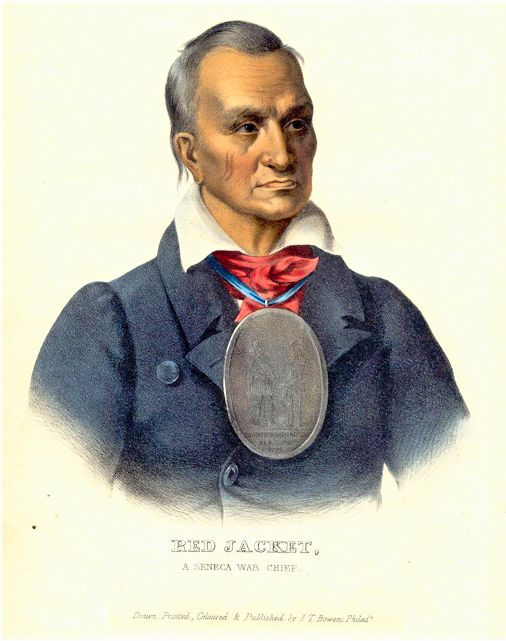
Seneca Indians were the westernmost indian nation within the Six Nations or Iroquois League, also known as the Iroquois Confederacy. They are also known as “Iroquois Indians.”

The word ‘Seneca‘ came from the name of one of their villages, Osininka. Seneca Indians called themselves Onandowaga, which means “People of the Great Hill.”

Seneca Indians
January 16, 2011

The Enterprise Rancheria of Maidu Indians of California originally lived in northeastern California’s mountain meadows and valleys. Today the Maidu’s descendants live on small reservations in California or in communities near these reservations. One of these is the Enterprise Rancheria.

US Tribes E to G
January 2, 2011

Seven prophets came to the Anishinabe. They came at a time when the people were living a full and peaceful life on the North Eastern coast of North America. These prophets left the people with seven predictions of what the future would bring. Each of the prophecies was called a fire and each fire referred to a particular era of time that would come in the future. Thus, the teachings of the seven prophets are now called the “Seven Fires.”

Native American Prophecy
December 27, 2010

Home :: Treaties by Tribe :: Treaties by Tribe A-C :: Treaty With The Comanche, Aionai, Anadarko, Caddo, Etc., 1846

The United States sent Pierce M. Butler and M.S. Lewis to negotiate a treaty with the Texas Indians in May of 1846. Butler knew most of the Caddo chiefs, but became ill, so Lewis, who was less experienced and competent took charge. Lewis collected the Indian signatures on separate pieced of paper, but did not identify them by tribe. Later it was revealed that he wrote the actual treaty after he returned to Washington.

This is the exact wording of the treaty made at Council Springs, Texas on May 15, 1846 between the United States and 63 Indians from the Comanche tribe, I-on-I Band  (also sometimes called Hainai, Aynais, Aynay, Ainai, and Ayonai – they were the primary group in the Hasinai confederacy and part of the greater Caddo Tribe.), the Ana-da-ca Band (Anadarko Tribe),Cadoe Tribe (Caddo tribe), Lepan (Lipan Apache), Long-wha tribe (the Longwha cannot be identified except for their inclusion in the preamble of this treaty – they are not included in the signature section), Keechy Tribe, Tah-wa-carro (Tahuacarro or Tahwacarro – Who are they?), Wichita, and Waco tribes of Indians.

Treaties by Year
December 26, 2010

The Acoma Indian Reservation is located in parts of Cibola, Socorro, and Catron counties in New Mexico, USA. This reservation covers 594.996 sq mi (1,541.033 km²). The Acoma Pueblo is the heart of the reservation and is the oldest continuously inhabited place in the United States.


American Indian Reservations A to C
December 5, 2010

Opechancanough or Opchanacanough (1543?-1644) was a tribal chief of the Powhatan Confederacy of what is now Virginia in the United States, and its leader from 1618 until his death in 1644. His name meant “He whose Soul is White” in the Algonquin language.

Famous Powhatan
December 5, 2010

ENGLISH NAME: Little Carpenter
NATIVE NAME: Attakullakulia
MEANING OF NAME: Little Carpenter
ALTERNATE NAMES: Ukwaneequa, Chuconnunta, The Civil Chief, or White Chief
ALTERNATE SPELLINGS: Attacullaculla, Attakullaculla
SIGNIFICANT POSITIONS: Supreme Chief of the Cherokee 1760-1775

BIRTHPLACE / DATE: 1699, Big Island of the French Broad River, later called Sevier’s Island, TN
RESIDENCE: Tellico, and Chota, E. Indian Nation, TN
DEATH DATE / LOCATION: 1797, Nacheztown, North Carolina
BURIAL PLACE:

Famous Cherokee
December 5, 2010

NATIVE NAME: Aganstata

ENGLISH NAME: James BEAVER Jr

ALTERNATE NAMES: Oconostota, Oconastota Moytoy, Cunne Shote, Warrior of Chota, Stalking Turkey (a name which causes confusion with his uncle Kanagatucko, who was known as “Standing Turkey”), Groundhog Sausage

ALTERNATE SPELLINGS: Oconastota, Oconostata, Oganatoga, Shote is a variant of Chote or Choat or Choate, Cumnacatogue

MEANING OF NAMES:

  • Aganstata was translated as Groundhog Sausage, from “agana” = groundhog, and “tsistau” = “I am pounding it” as in pounding meat in a mortar.
  • Cunne Shote may be the English mispronunciation of the Cherokee words for Stalking Turkey.
Famous Cherokee
October 8, 2010

Most archaeologists of the Northern Plains recognize eight different classes or styles of medicine wheels.

“Lo-and-behold, the Blackfoot elders have routinely referred to one of these eight styles — although they don’t call it that — and they strongly indicate these were monuments to particular people, or events that happened in the past. I think there’s some consensus on that.”

Brace points out the most recent wheel was constructed in Alberta in 1938, as a memorial to a renowned Blackfoot leader.

Brace has come up with a medicine wheel definition that allows him to categorize the 12 to 14 Saskatchewan wheels, which range in diameter from 45 to 144 metres (160 yards), into four groups: burial; surrogate burial; fertility symbol; and “medicine hunting”.

Medicine Wheel
October 8, 2010

Simon Kytwayhat, a Cree elder who lives in Saskatoon, says he learned his Cree perspective on the meaning of the medicine wheel from elders. Kytwayhat’s interpretation of the meaning of the medicine wheel associates the four directions represented on the wheel with the four races and their attributes — the circle and the number four are sacred symbols in First Nations’ spirituality.

Medicine Wheel
October 7, 2010

Medicine wheels are disappearing at an alarming rate The Moose Mountain Medicine Wheel was first noted by Canadians of European ancestry in an 1895 report written by land surveyors. The report described the central cairn of the medicine wheel as being about 14 feet high, says Ian Brace, an archaeologist with the Royal Saskatchewan Museum […]

Medicine Wheel